
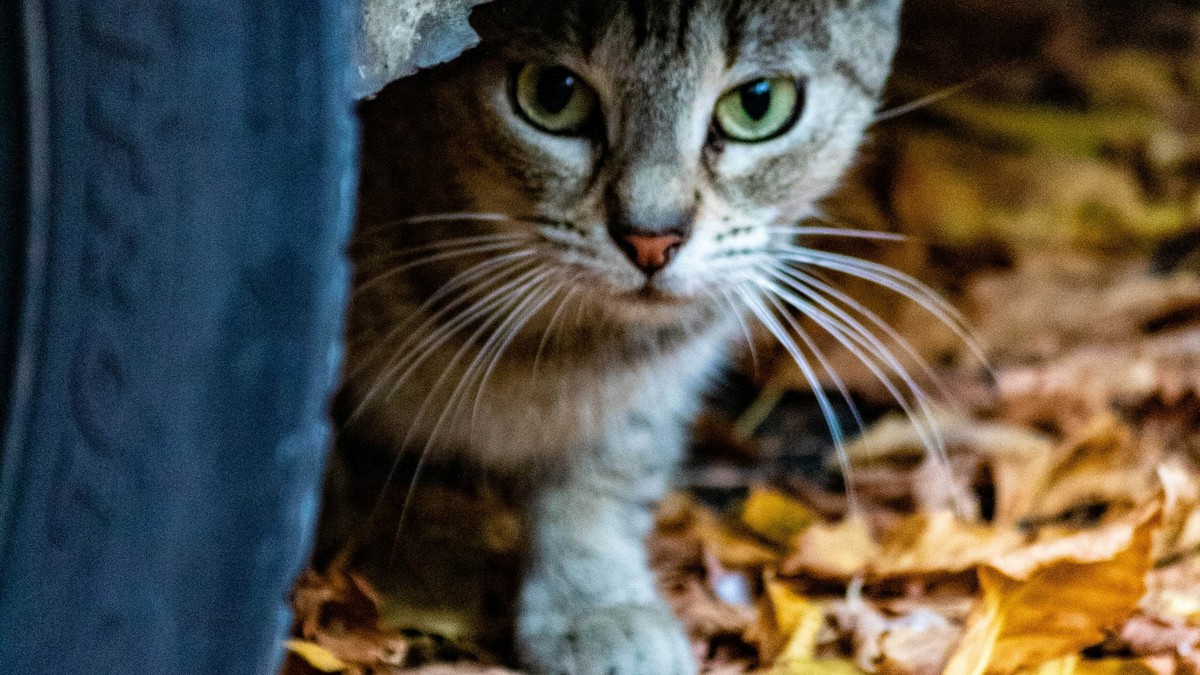
Did you find a lost cat outside? Perhaps a new addition to your established community cat colony showed up recently. Have you found a hungry cat in your garage or under your shed?
I implore anyone that has a cat show up on their doorstep or their established colony to not assume she’s simply another community cat who lives outside.
You know the saying about “assume” right?
Chances are that any cat who shows up likely IS one of the millions of community cats that make her home outdoors. Most ‘lost’ cats aren’t actually lost. It is completely possible that the cat was abandoned by her owner and left to fend for herself. Or it’s entirely possible she was once a beloved pet who simply got lost and has a family missing her very much.
So that brings me to my first tip! (Don’t forget to stop by the How to Save a Cat post if your new friend isn’t lost)

1. Don’t Assume Anything
If you’ve had a lot of exposure to community and feral cats, sometimes you will automatically jump to the conclusion that is a cat is not socialized simply because she refuses touch, won’t eat in front of you, hides and hisses if she feels trapped. These are all indicators of a cat being truly feral.
These are also all indicators of a frightened cat.
A frightened cat will hide, stay silent, and hiss or growl if she feels threatened. She might not trust anyone easily because she is simply so freaked out that everything is frightening her, including people.
No cat will react to being lost or abandoned the same way. Some of terrified and hide. Some will come up to the first friendly person they see, scared out of their minds. Some adapt fairly easily. You never can tell.
So no matter what you believe about the new cat in your territory, please at least attempt to see if someone is missing her.
2. Check for an Ear Tip (and Collar)
Is one ear missing the very tip? This is the universal sign of a community cat that has already been fixed, vaccinated against rabies, and returned outdoors. This means the cat is a community cat and unowned. A caretaker might be missing her from their cat colony, so I would still look online just to be sure. But I’ll write more about ear tips and TNR (Trap-Neuter-Return) next week!

If the ear tip looks torn, however, please follow the rest of the instructions just in case it is an injury and not a result of TNR.
If she has a collar, she is likely missed by someone. Check for tags, too. Chances are, however, that most cats won’t have a collar or if they did, it was a safety collar designed to break away if needed to prevent harm to the cat. Cats are often climbing trees and the like, and if the collar gets snagged on a branch, this can result in strangulation of the cat. That is why many cat collars are break-away or a safety collar to allow our feline companions a way to escape.
3. Determine Sex, Color/Breed, and Approximate Age
You first need to determine the sex of the kitty in question. I say her in this post, but it could as easily be a boy!
It might even be hard to tell if a neutered male isn’t female. Some places remove the entire scrotum with the testicles when they neuter cats, and some leave the scrotum intact but remove the testicles. So this makes them look like shrunken testicles in neutered males. Or no testicles at all.
Do your research on the proper color naming of a cat. Don’t call a tortoiseshell cat by the wrong term, like a calico! Some people might know what you mean, but if someone is just reading an ad in the newspaper that says “Found a calico at So-and-So Street,” they may not call because they’re looking for a tortoiseshell cat or a torbie, which are similar to a calico but are not calicoes.

Any strange markings that are unusual? Extra toes? Those are polydactyl cats and quite memorable. It should always be mentioned!
You can usually guess if a cat is a young cat or an older cat, but after a year old until they hit ten years old or more, it’s difficult to guess. But be sure to say “young cat” or “old cat” in a post, or older kitten, so that it gives some reference.
4. Check for a Microchip
The most obvious way to check if a cat is a lost pet is to have her scanned for a microchip if she doesn’t have a collar. This can be done at shelters or vet clinics in your area. If she does have a microchip, and it’s properly registered bingo!
Be sure to ask shelter staff if the cat has already been fixed or not! They should be able to tell easily with the male cats. With females, they have to check for the tattoo a lot of places use by shaving their bellies. Also ask them to guess their age, which they can do by checking their teeth. This is an estimate only, but might help you describe this found cat online.
So how do you get the cat into a shelter or vet?
If you can pick the new cat up and get her into a carrier easily, awesome. But if the cat will not approach, you may need to trap her to accomplish this step.

5. Check Classifieds, Social Media, Shelters for Lost Cats
You will want to check Craigslist, Facebook, your local newspaper’s classified section for ads for a lost cat matching the description of the cat you found.
There are many regional Facebook groups for lost and found animals, as well as apps, that will do the same thing. Definitely post that you found a cat, with her picture, to these groups as well. You don’t know how long this cat has been lost. It could be days. It could have been years!
Find out the local animal control and humane society shelters, and contact them, probably best by phone. They often have a database of lost and found animals, just in case one gets brought in. You can report that you found a cat. You can also post on their Facebook Page wall, and ask them for a courtesy post. They might share your post about finding the cat to their followers!
6. Be Persistent!
Keep checking ads and social media regularly over the next couple of months. If your new feline friend has been missing a very long time, her previous owners might not be checking often anymore. It doesn’t mean that they didn’t love her. Just that they had given up hope of finding her.
Imagine how much joy you could bring to a person’s life just by finding their beloved animal companion? That’s a big reason to not give up after the first post.
During this time, keep feeding the cat. Watch her behavior. Learn her mannerisms. Keep an eye on her in case she goes into heat.

7. Success! Or No Luck? [Figure Out What to Do]
If you find someone who lost their pet, through the microchip or an ad in the newspaper or a post on Facebook, be sure to talk to the person. Make sure they can show you pictures of the cat they lost. Let them meet the cat. If the pictures don’t match the cat at least a bit, or the cat doesn’t recognize them, it’s a no go. But don’t rely on both. Cat appearances can change. Cats can also be standoffish even with people they know. She might not go to her old family immediately.
Be reasonably sure this cat belongs to them before letting them take her. While most people aren’t malicious, there are some horrible people out there.
If you don’t find the owner, and you likely won’t, then you must decide what to do.
Is the cat fixed? You will need to get them fixed.
Is the cat-friendly enough to be adopted into a home? Does she like being inside? Does she use the litter box? She’s a candidate for adoption then. She can be brought to a no-kill shelter or you can try to rehome her yourself.
Is she afraid of people? Does she freak out when locked inside? Then she’s likely unadoptable and needs to be returned to her outdoor home, or if no one can care for her outside, then relocated to another home, like a barn or another cat colony with a caretaker.
Are you up to the task?
Summary
Too long, Didn’t read?
Here are all the steps really quick!
- Don’t Assume Anything
- Check for an Eartip (and collar)
- Determine Sex, Breed/Coloring, Age Estimate
- Check for a Microchip
- Check Classifieds, Social Media, Shelters
- Be persistent
- Success? No Luck? Figure Out What to Do
Have you had experience reuniting a lost cat with her fur-parent? Have you lost a cat before? Let me know in the comments! Have questions? Ask those below too!
Lovies!