
Why is spay and neuter important? For the average pet owner, they may not realize just how absolutely vital spay and neuter is for their pets and our communities.
If you’re a pet owner or a person who found a colony of hungry feral cats, or a person who is looking to take in a barn cat or three, then this is for you. This post is to educate the billions of people in the United States (or elsewhere) that may not realize these facts.
Do you remember the Price is Right with Bob Barker? At some point during the show, usually the end, he would always give a shout out to remind people to spay and neuter their pets. For decades, that was his thing. It’s an important message. A message that even in 2019 so many people ignore.
Still, there are many people, maybe yourself, who don’t understand why it’s such a big deal. They either put it off because of financial reasons, because they want just one litter out of their pet, or because they love kittens or puppies, or because they feel the animal might miss their reproductive capabilities.
Maybe they feel the message spread by spay and neuter advocates is exaggerated or misleading.
I can tell you absolutely that they are not exaggerated OR misleading. I will even offer my own personal experience with these things that conclusively proves the animal rescue experts are absolutely right.
Spay and neuter is the MOST important way you can care for your furry family members. If you love them, then spaying and neutering isn’t an option. It’s mandatory.
In this post, we will discuss:
- The Companion Animal Overpopulation Crisis
- Pet Health and Neutering
- Behavior Issues
- Fun Cat Reproduction Facts
- Neutering Myths

The National Companion Animal Overpopulation Crisis
There are no firm statistics on the number of animals entering shelters in the United States or how many Americans own pets. There are estimates based upon surveys and the shelters that do keep records of intakes, outtakes and euthanasia rates. The fuzziness of the animal population statistics can be explained, but I’ll just list general statistics that are really good estimates. The ASPCA has a good list of all shelter statistics if you’re interested.
- Anywhere between 49% and 68% of Americans have pets.
- An estimated 6.5 million pets enter US shelters each year. (3.3 million dogs and 3.2 million cats)
- Around 1.5 million companion animals are euthanized in US shelters each year. (670,000 dogs and 860,000 cats)
- Around 3.2 million animals are adopted from US shelters each year
- About 710,000 animals are reunited with their owners each year (Around 90,000 cats and 620,000 dogs)
- There are around 78 million dogs in homes across the US and 84 million pet cats!
- The number of community (or unowned) cats in the US is estimated to be anywhere from 50 to 70 million!
- The reason there are 1.5 million pets being euthanized in 2018 versus 20 million killed annually in the 1970s is the implementation of spay and neuter resources and education, Trap-Neuter-Return (TNR) programs, pet transportation to other less crowded shelters, and working cat programs.
- According to Tiny but Mighty by Hannah Shaw, the “Kitten Lady”, a huge number of those cats being euthanized in shelters every year are kittens, especially kittens under adoptable age.
Great work has gone into reducing puppy mills, enforcing laws to require pet shops to ‘sell’ shelter pets and not puppies produced from horrible places that breed animals for profit. The publicity of shelters in the news and social media has helped tremendously, too!
That does not mean that we’ve met our goals however! Just ONE animal euthanized simply because of a lack of home is one too many.
Just to make this clear, I don’t have problems with ‘reputable’ breeders. I don’t believe we should be creating designer dogs and cats, especially as some of them come with serious health risks just to achieve a certain look, like munchkin cats. That isn’t okay. I also think spending thousands on a specific breed is outrageous when there are so many dying unwanted in the shelters each year.
However, reputable breeders are a very small part of the overall pet overpopulation problem and they serve a purpose to a society who wants small dogs who fit in their purses or cats who go passive when picked up. As long as these breeders try to ensure good homes, fixes the puppies and kittens, then I leave well enough alone. Reputable breeders also are always willing to take back any animal that becomes unwanted and proceeds to rehome them.
I am not on a crusade against legitimate, reputable breeders. I don’t plan to mention them at all on my site. They are a very small part of the problem. Irresponsible pet ownership that continues to this day IS the problem.
Personally, I believe that if you want a specific breed of cat or dog, look into rescuing one! It is often cheaper than getting one from a breeder, too.
I may catch flack for this, of course. Certain animal rescue people are quick to judge and condemn and get rabid in their convictions, right or wrong. But breeders aren’t necessarily the problem. Most breeders I’ve come across will ensure the animal is fixed before selling them as well nowadays. So kudos to them.
Pet overpopulation is the #1 reason to spay and neuter your pets and community cats!
Spay and Neuter for Their Health!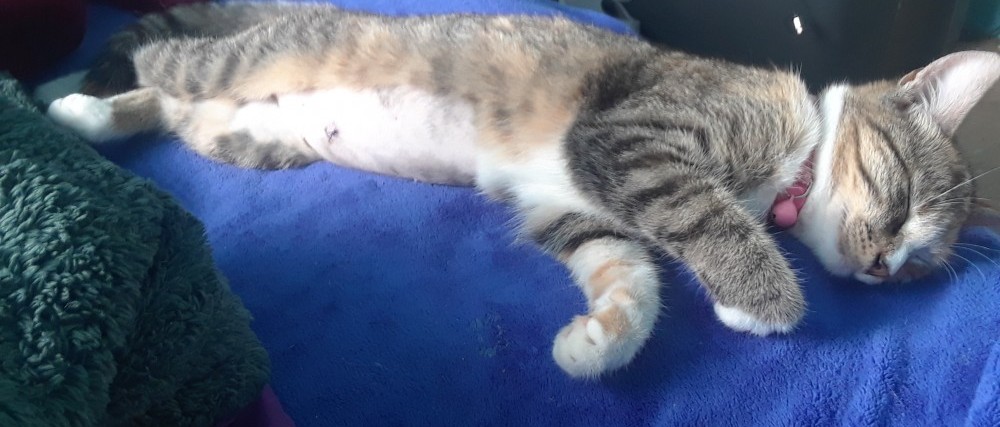
Most people realize that spaying and neutering pets prevents unwanted litters. But did you know that spay and neuter also eliminates many causes of premature death in pets?
If you spay your pet, they cannot get uterine infections or tumors which kill around 50% of the dogs and 90% of cats diagnosed. The risk of breast tumors is greatly reduced as well.
When I was young and stupid (20 years ago), my cat got pregnant. She gave birth to a dead kitten that got stuck in the birth canal. I rushed her to the vet. In turn, she had a uterine infection so bad they had to do an emergency and seriously risky spay operation that I’m lucky she survived. You think it won’t happen to you, but it most definitely can.
If you care for community cats or barn cats, you will doubtless want to ensure this doesn’t happen. Cats are notoriously difficult to tell if they aren’t feeling well and you will likely not realize something is wrong until it’s too late!
If you neuter your pet, he cannot get testicular cancer or most prostate issues!
Without testicles, they cannot get testicular cancer.
Unaltered cats engage in fighting and mating behavior, which increases the risk of contracting Feline Leukemia and Feline Immunodeficiency Disease.
When tested in community cat populations, the rate of these illnesses is about 2-5% according to the American Association of Veterinary Medicine during one of their studies, which is the same as in owned cats in the US. But in MOST cases, it is unaltered tom cats who carry these two diseases, especially FIV. They spread it to unaltered females during mating. They spread it to other unaltered males during fighting over mates. Reduce the risk in your colony by spaying and neutering.
To be clear, I do NOT test my colony for FeLV or FIV unless there is a valid reason for it, such as illness that isn’t responding to treatment.
The only cats that have ever tested positive from my colony or my relocation project were unneutered tomcats. These are the ones that are often sickly as well, in my observations, even if I’m unable to trap them or test them before they disappear.

Giving birth is dangerous!
Just like in humans, there is a risk of giving birth to kittens and puppies for animals. Risks to both the mama and the babies. The mother could die. The babies could die and force the mother into heat again and a second pregnancy before she has recovered from the first increases her risk of death!
Cat sex is painful!
Male cats have barbed penises. Female cats do NOT enjoy sex. It hurts. The amount of pain is debated, but it still hurts. Those barbs are to encourage the female cat to ovulate and they can’t get pregnant without them. Still, not a fun experience for your beloved girl!
As a side note, the barbs disappear in neutered male cats.

The Importance of Spay and Neuter for Behavioral Issues
I am a member of quite a few local rehoming and lost and found pages for pets. I cannot even tell you how many people rehome unaltered cats and dogs for behavior problems. It’s absolutely ridiculous, to be honest. One simple surgery will likely fix nearly all the behavior issues with their pet.
Full disclosure: spaying and neutering your pets doesn’t always cure every behavioral problem they have. But it almost always does.
I have personally witnessed all of these behaviors being reduced or eliminated in only a couple weeks after surgery. Almost 100% elimination of spraying and fighting after over twenty surgeries at once in adult cats. Boom.
- Territorial spraying of urine reduces! No more stinky unfixed tom cat pee on your door!
- No more roaming looking for mates! Your pet will want to stay home more.
- No more aggressive fighting and territorial attacks. Without testosterone, the males settle down a lot and are not as interested in seeking out fights or getting as territorial with other animals. Aggressiveness observed in dogs is often reduced simply by fixing them as well!
- No more mating stress! Females AND males will start to relax and play and sleep more without those hormones raging around in their bodies demanding they mate, mate, mate!
- Not as much dominating behavior between males. This behavior is observed when a male mounts another male and pins him down. It happens in cats and dogs, and is more about displaying dominance than mating. Some neutered cats will do this, but as I’ve seen it stop after neuter surgery in my own cat I know it is hormone related in most cases.
- Female cats will go into heat over and over and over again until they get pregnant. For months.

Fun (and Scary) Cat Reproduction Facts
The domestic cat breeds rapidly and often, especially in warmer climates.
- A female cat can have 3 litters in one year (although the average is 1.4 litters per year)
- The average litter has 4 kittens (but can range from 1 to 9 kittens)
- If a cat lives to be 15 years old, that could theoretically be 180 kittens!! (Not counting grandkids from the daughters!)
- In 7 years, one female cat and her offspring could theoretically produce 420,000 cats!! Check out my Kitten Calculator to find out how many cats one unaltered pair of kitties can produce!
- Cat sex hurts! The male cats (called toms) have barbed penises. These barbs are necessary to stimulate the female cats (called queens) to ovulate. So all that screaming you hear your barn cats do when one of them is in heat? It’s not just fighting and no, the females are not enjoying themselves.
- One litter of kittens can have multiple fathers. This is called superfecundation and is not unique to cats or dogs, but can happen with human twins too! This is when multiple eggs are released and then fertilized during two (or more) separate intercourse acts. Theoretically, it is possible that an entire litter of kittens can all have different fathers.
- A female cat can go into heat as early as 4 months old!
- The gestation period of the domestic feline is approximately 63 days.
- Female cats go into heat, like dogs and NOT like humans.
- Cats can go into heat while still nursing their previous litter.
- Cats are induced ovulators. They do not release eggs until after the first mating.
- If a litter of kittens dies or is somehow lost (because a human takes them, for example), this will cause a female cat to go into heat prematurely. This second pregnancy is riskier for the female cat as she has not fully recovered from the previous one.
- Female cats will continue to go into heat until pregnant or until the breeding season ends (if outside). That means an inside cat kept away from toms to prevent pregnancy will likely continue to go into heat over and over and over again, with little breaks in between. (I have witnessed this while waiting for a spay appointment for a female cat I had dumped on me).
- Breeding season in cats, depending on location, is from around January/February until August(ish). This means that ‘kitten season’ cat rescuers dread usually runs from March(ish) until November(ish). If you live in the southern United States, kitten season can be year-round!
Neutering Myths Debunked!
But neutering my cat will make him gain weight.
Spaying or neutering a cat will not make them fat.
Unaltered cats do tend to be very lean and fit because they are often roaming around searching for mates, especially the males who travel for miles each night. They may be skipping meals when in heat or searching for a nice stud to father a litter of kittens. So yes, they tend to be lean to the point they may look unhealthy and skinny.
By fixing these cats, they will put on healthy weight because they won’t be thinking with their hormones and instead will be relaxing and eating normally. I have personally witnessed over a dozen cats relax, lying about in the grass in the sun, after a fair number were trapped and neutered. These cats would show up to each meal, when before the unneutered toms would often skip meals.
Because they aren’t roaming around searching for a booty call, and eating better, they will put on healthy weight. If your cat is indoors, though, you will need to ensure he gets proper exercise and stimulation to prevent excessive weight gain. It isn’t neutering that does it though. Without proper exercise, any cat will get fat.

Getting my cat fixed is just too expensive.
This is untrue. If you cannot afford to take your pet Fluffy into the vet for this necessary surgery, there are other options. There are low-cost spay and neuter clinics opening up everywhere across the US and abroad. Various animal shelters and animal control agencies offer low cost or free spay and neuter surgeries during certain times of the year. There are often places that low-income people can apply for help to get their cat fixed.
Money is an excuse, not a reason.
Especially as it is actually MORE expensive to allow a cat to have kittens than it is to get her spayed. Pregnant cats eat a lot more. After weaning, kittens eat a lot of food until they’re old enough to be adopted. The time involved in finding homes for 4-6 kittens, also increases the time invested.
But he will miss his testicles or she will mourn not having kittens.
This is untrue.
Cats do not think of the future as you or I would. They don’t know they are missing anything. Cats and other animals are more focused on the now instead of the past or future. They are concerned with their comforts, their stomachs, their safety, and whatever random instinct is triggered at that moment.
I have never seen a cat miss not getting pregnant. I have never seen a male cat feel ‘less’ because of the lack of testicles. In fact, I find their confidence grows exponentially now that those pesky hormones are gone! I have personally witnessed two very skittish male cats overcome their shyness and accept pets for the first time from strangers after being fixed. Before being fixed, they were scared of their own shadows.
Cats can tell when a male cat is ‘fertile’. They can smell it. Most cats, who are not in heat, seem to really, really dislike unaltered toms. I have witnessed happy, friendly cats attack a friendly, but intact, male cat for no reason, over and over again. They do not like them around. They seem to feel threatened by them. Even when they aren’t threatened.
My kids should get to watch my cat have one litter to understand the circle of life.
A big fat no. There is YouTube for that. Or go to your local animal shelter and foster a pregnant or nursing cat temporarily. But don’t bring up to 9 new lives in this world that might not have good homes when millions are dying in shelters. That’s pure selfishness.
Maybe twenty years ago, this was acceptable. But do you see where that got us now? Millions upon millions of companion animals being born every year and not enough homes for them all.
Love Them? Fix Them!
It’s just that simple. If you love your pets, you should be fixing them. I listed dozens of reasons in this article for fixing your cats and other pets. A few of the highlights:
- Cat and dog overpopulation
- Euthanasia rates in shelters are still over one million animals per year!
- Health risks eliminated and greatly reduced by preventing cancer and infections
- Behavior problems greatly reduced or eliminated by fixing!
- No more peeing/spraying/marking their territories!
- Yowling, fighting, and screaming gone!
- Aggressive behavior reduced, especially on the males’ part.
- It is cheaper to fix an animal than raise a litter until they’re adopted.
- Cat sex hurts!
Do you have a story to share about the first time you witnessed the miracle that happened after you fixed an adult cat? Or a dog? Tell me below!
Lovies!